


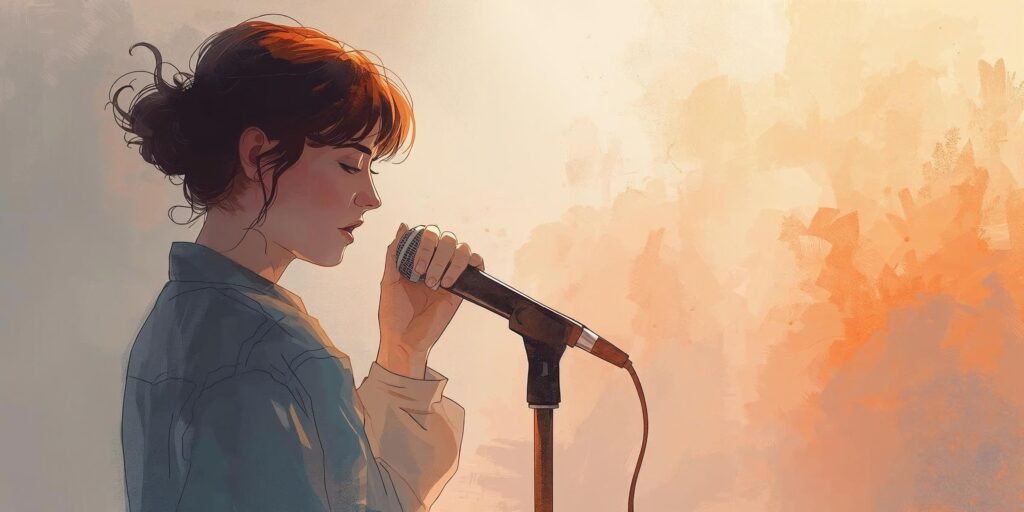
There comes a moment for many professional speakers when excitement begins to fade. The work that once fueled energy and purpose can start to feel like obligation. Travel becomes exhausting. Repetition becomes numbing. Applause—even standing ovations—stop feeling like affirmation and start feeling like pressure.
This isn’t failure.
It’s burnout — and it happens even to the most passionate communicators.
But burnout doesn’t mean the love is gone. It means the relationship with your craft needs renewal. Speaking is a calling—but it is also a job. And like every job, it requires maintenance, boundaries, and re-discovery.
Here’s how to reconnect with the joy of sharing your voice.
🌡️ Recognize the Signs of Speaker Burnout
Burnout isn’t simply being tired. It shows up in subtler ways:
- Dreading upcoming travel or gigs
- Feeling emotionally detached from your own message
- Discomfort with praise or feeling like a “performer”
- Loss of curiosity about audiences
- Decreased creativity and innovation
- Resentment toward logistics, clients, or prep
- Feeling your story has lost its meaning
Your passion didn’t vanish.
It’s buried under exhaustion and expectation.
🧠 Understand What Causes Burnout in Speakers
Speaking is uniquely demanding:
- High emotional responsibility
You hold space for many people’s hopes, pain, and goals. - Constant evaluation
Every talk is a performance with visible feedback. - Travel strain and logistical complexity
Airports and hotels drain energy faster than the stage. - Pressure to always be inspiring
Even when your own tank is low. - Repetition
Saying the same things without seeing long-term impact can feel hollow.
Burnout thrives where effort feels disconnected from meaning.
🎯 Reconnect with Why You Speak
Purpose is the antidote to depletion.
Ask yourself:
- Why does this message still matter?
- Who specifically is helped by what I share?
- What values brought me into this career?
- How has my message evolved with me?
One powerful exercise:
Collect 10 emails or messages from people who told you your talk changed them. Re-read them before you travel or rehearse.
Impact re-energizes purpose.
🔄 Refresh Your Message—Even Slightly
Sometimes burnout isn’t about the craft. It’s about stagnation.
The remedy:
- Update stories
- Add new research
- Shift angles based on emerging needs
- Include more audience collaboration
You don’t need to rewrite your entire keynote—just re-awaken your curiosity about it.
✋ Set New Boundaries
Joy disappears when you say yes past your personal capacity.
Evaluate:
- Ideal number of talks per month or quarter
- Maximum travel distance without break days
- Events that drain vs. events that fuel
- Pricing that reflects energy expenditure
Burnout often stems from serving everyone except yourself.
Saying no is a speaker’s skill—and a wellness strategy.
🤝 Rebuild Community in the Profession
Burnout isolates. Connection heals.
Engage:
- Speaker mastermind groups
- Peer rehearsals and content exchanges
- Mentorship (giving and receiving)
- Conference green room conversations
Feeling understood reduces emotional strain.
Collaboration reintroduces play.
🎨 Reintroduce Play into the Craft
Play sparks passion.
Try:
- Testing new jokes or story riffs
- Changing pacing or delivery style
- Switching stage blocking
- Experimenting with slide-free sessions
- Practicing improv exercises
Creativity wakes up the joy circuits in the brain.
The stage can be a sandbox—not just a podium.
🌱 Let Your Message Grow With You
Burnout sometimes signals that you have personally changed but your brand hasn’t caught up.
What have you:
- Learned recently?
- Survived?
- Become more passionate about?
- Let go of?
Your speaking career should evolve with your identity—not hold it hostage.
A refreshed message can reignite meaning.
🧘♂️ Build Recovery into Your Professional Identity
High performers often mistake depletion for dedication. But sustainability requires rest.
Rest that renews may include:
- White space in your calendar
- Days with zero performance expectations
- Nature, therapy, or silence
- Journaling after events to process emotions
Recovery is not a break from the work.
Recovery is the work that allows the speaking to continue.
💛 Allow Yourself to Be Human
On stage, you are a voice of hope and clarity.
Off stage, you are a full human with needs, limits, and seasons.
Normalize the cycle:
- Passion → Work → Exhaustion → Rest → Return renewed
Falling out of love doesn’t mean you weren’t passionate.
It means you need nourishment, not judgment.
Give yourself permission to feel everything.
Including the desire to step back before stepping forward.
🌟 Final Thought
Burnout is not a verdict—it’s a signal.
A sign that your gift needs care, not abandonment.
A reminder that your voice deserves the same compassion you offer others.
You fell in love with speaking because it changed you.
It can change you again—into someone wiser, more grounded, and more aligned with joy.
The stage is still waiting—but it’s okay to return only when you are ready.
Your passion isn’t gone.
It’s simply asking for a better partnership.
Sources
- https://pmc.ncbi.nlm.nih.gov/articles/PMC3986888/
- https://pmc.ncbi.nlm.nih.gov/articles/PMC4246028/
- https://pmc.ncbi.nlm.nih.gov/articles/PMC3824747/
- https://pmc.ncbi.nlm.nih.gov/articles/PMC8611531/
- https://www.sciencedirect.com/science/article/pii/S1877042815011400
- https://www.sciencedirect.com/science/article/pii/S0742051X21000735